ADVERTISEMENT
The announcement came without warning.
No carefully planned media rollout.
Just a quiet statement delivered late Tuesday evening inside a private gathering at Mar-a-Lago that instantly sent shockwaves through political circles, television networks, and millions of supporters across the country.
The ballroom inside the Palm Beach estate had been prepared for a donor appreciation dinner attended by longtime political allies, business leaders, veterans organizations, and close family friends.
Crystal chandeliers glowed above elegantly decorated tables.
Nobody expected the evening to suddenly become deeply personal.
At first, guests responded with the usual applause.
Others anticipated another confident speech about politics and current events.
Instead, Trump remained unusually quiet.
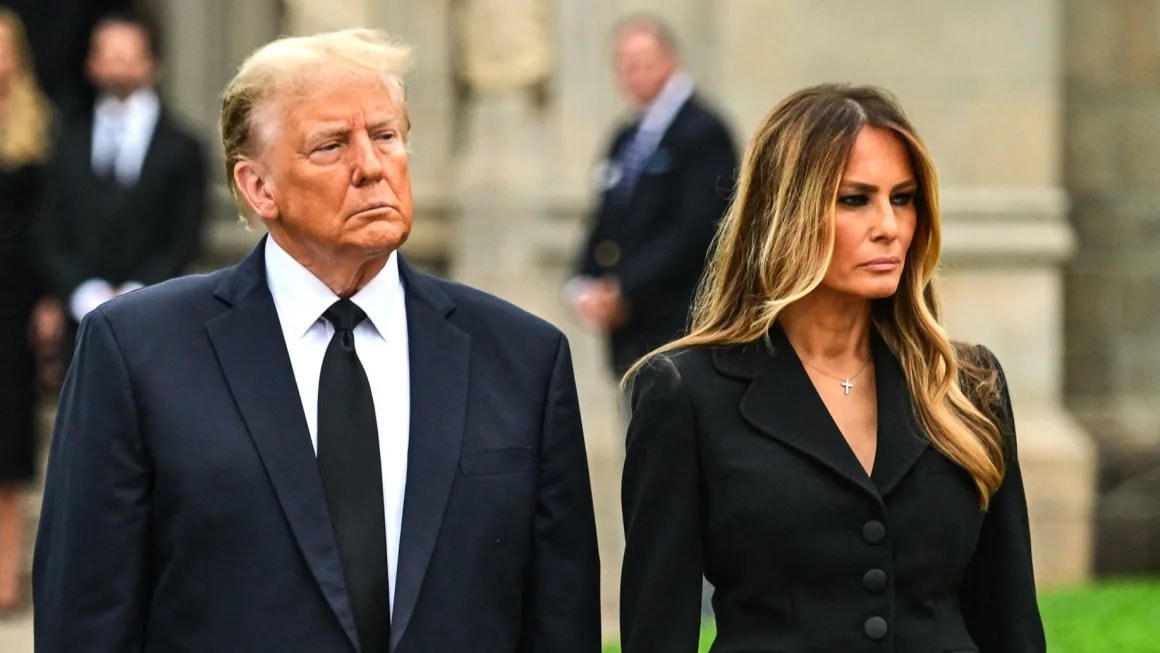
Melania stood beside him holding several folded sheets of paper in her hands.
People near the front immediately sensed something was different.
For several long seconds, neither of them spoke.
Then Donald Trump finally leaned toward the microphone.
“Tonight,” he began quietly, “we need to tell you something important.”
The atmosphere changed instantly.
Trump continued.
“For many years, our lives have belonged to the public.”
“To politics.”
“To cameras.”
“To headlines.”
“And honestly… we accepted that responsibility.”
Melania stood silently beside him while listening carefully.
“But over time,” Trump admitted, “you begin realizing there are moments in life that matter more than public appearances.”
Several guests exchanged nervous glances.
The statement felt unusually emotional coming from someone known for projecting constant confidence and control.
Then Melania stepped forward.
Her voice sounded calm but noticeably softer than usual.
“For the past several months,” she explained, “our family has spent more time together privately than we have in many years.”
The ballroom remained completely silent.
“And during that time,” she continued, “we realized something important.”
“There are experiences, conversations, and moments as a family that we cannot continue postponing forever.”
People throughout the room appeared confused but emotional.
Many initially feared the announcement involved a serious health issue or family emergency.
But Trump quickly clarified the reason behind their decision.
“We are not disappearing,” he said gently.
“This is not goodbye.”
The room relaxed slightly.

“But we are stepping back from several major public appearances and high-profile events moving forward.”
A wave of whispers spread quietly throughout the ballroom.
Trump explained that years of nonstop political campaigns, legal battles, media pressure, security concerns, and public scrutiny had created a pace of life that left very little room for normal family moments.
“There are sacrifices people never see,” he admitted.
“There are years you lose without even realizing it because you’re constantly moving from one battle to the next.”
Melania nodded quietly beside him.
“For a long time,” she added softly, “we convinced ourselves there would always be more time later.”
“More time for peace.”
“More time for privacy.”
“More time simply being together without cameras.”
Her words visibly affected many guests inside the ballroom.
Several supporters near the front tables wiped tears from their eyes.
Then came the moment that changed the entire atmosphere of the evening.
Donald Trump looked directly toward Melania before speaking again.
“A few weeks ago,” he revealed, “Barron asked us something very simple.”
The room became still again.
“He asked when life would finally slow down enough for us to enjoy it as a family.”
Several people inside the ballroom immediately became emotional.
Trump paused briefly before continuing.
“And honestly… neither of us had a good answer for him.”
Melania lowered her head slightly while listening.
For years, the public had viewed the Trump family through the lens of politics, controversy, wealth, and constant media attention.
But this moment felt completely different.
Human.
Private.
Unexpectedly vulnerable.
Trump then admitted something many guests never expected to hear publicly.
“There are moments I missed as a father because I believed the next responsibility couldn’t wait,” he confessed.
“There were family dinners interrupted by emergencies.”
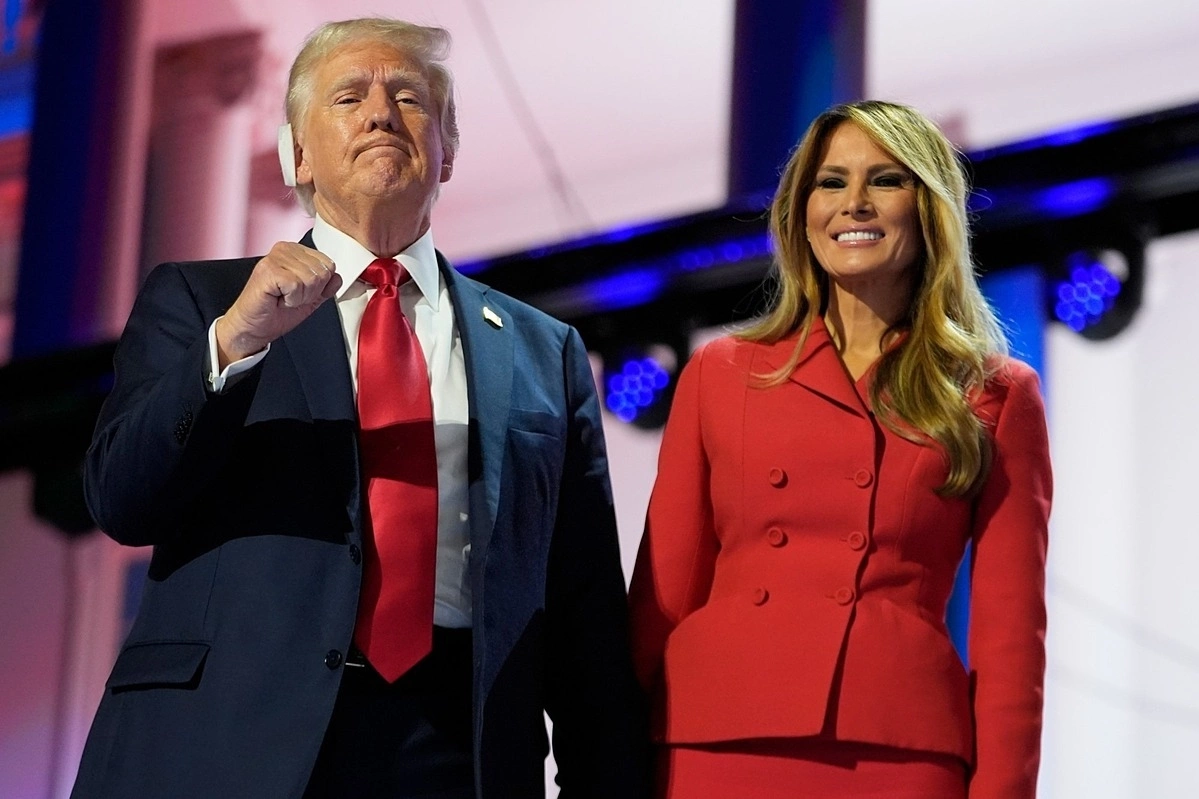
“Vacations canceled.”
“Conversations delayed.”
“And after enough years pass, you begin realizing time is the one thing nobody gets back.”
The ballroom remained frozen in silence.
Even photographers stopped taking pictures.
Melania then stepped closer to the microphone.
“For years, people have spoken about us constantly,” she said softly.
“But very few people ever asked whether we were tired.”
Her voice trembled slightly for the first time.
“And the truth is… sometimes we are.”
Several guests openly cried by that point.
Not because the announcement felt tragic.
But because it felt honest.
For once, the public masks seemed gone.
No political performance.
No carefully rehearsed slogans.
Only a husband and wife admitting the emotional cost of living beneath nonstop public attention for decades.
Trump then reassured supporters that they were not abandoning public life entirely.
They would still support charities.
Still attend selected events.
Still remain connected to causes important to them.
But the pace would change.
Priorities would change.
And family would finally come first more often than public expectation.
“We’ve spent years fighting for many things,” Trump said quietly.
“But now we also want to protect moments that belong only to us.”
The room erupted into emotional applause.
Not loud political applause.
Not campaign excitement.
Something softer.
Almost grateful.
Many guests later admitted the announcement forced them to think about their own lives and families differently.
One longtime family friend later described the atmosphere perfectly.
“It felt like two people finally admitting they were human after spending years being treated like symbols instead of individuals.”
Then came the moment that truly shattered the emotional restraint inside the ballroom.
Trump reached for Melania’s hand and held it tightly before speaking one final sentence.
“I gave so much of my life to the world,” he said softly.
“And now I want to make sure I still give enough of it to the people I love most.”
Melania immediately became emotional.
Several guests openly sobbed.
Even members of Trump’s staff looked visibly shaken.
For one brief moment, the politics disappeared entirely.
No headlines.
No controversies.
No television personalities arguing across networks.
Only a husband and wife standing together while choosing family over endless public pressure.
As guests slowly left Mar-a-Lago later that evening, conversations throughout the ballroom centered around the same realization.
The announcement was never really about stepping away from events.
It was about reclaiming time.
One elderly veteran standing near the exit quietly summarized the entire night before leaving.
“Tonight,” he said softly, “they reminded everyone that even the most public people in the world still want the simple things most families fight to hold onto.”
Tensions between the United States and Cuba have sharply increased amid a series of bold statements, policy moves, and economic pressures that have drawn global attention and raised questions about how relations may evolve.
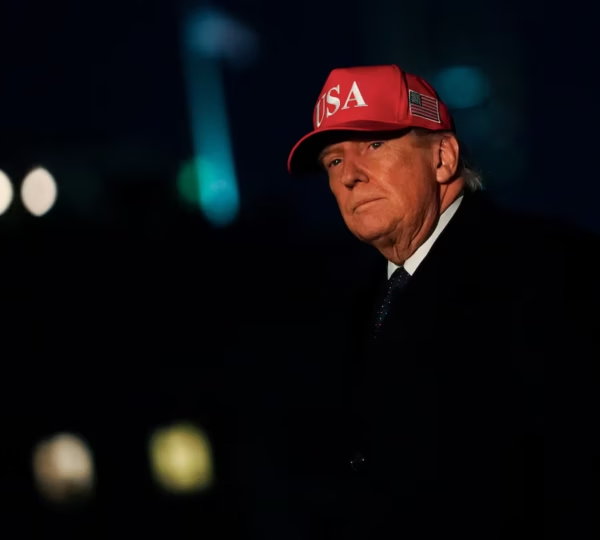
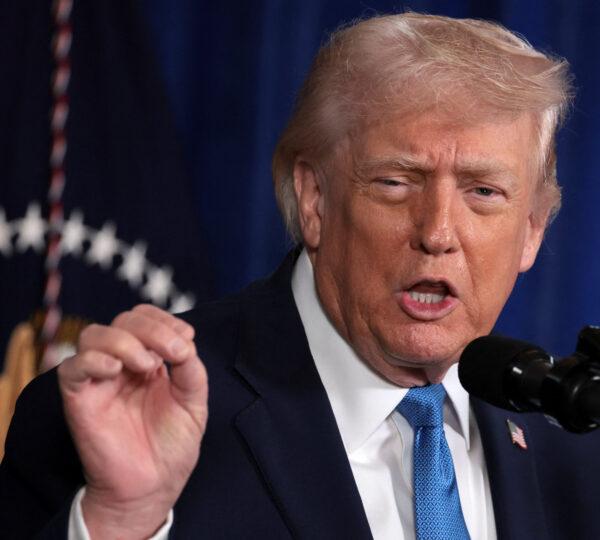
In mid‑March 2026, U.S. President Donald Trump escalated his rhetoric regarding Cuba by suggesting the United States could exert broad authority over the island, saying he expected to have the “honor of taking Cuba in some form.”
Trump also stated publicly that he believed he could “do anything I want” with Cuba, a remark that sparked widespread concern among diplomats, international observers, and Latin American governments.
These comments stood out because they came amid an already serious economic and energy crisis on the island, where widespread blackouts and shortages have deepened frustration and hardship for Cuban citizens.
The backdrop to the tension includes a long history of strained U.S.–Cuba relations dating back to the Cold War, the enduring U.S. embargo, and periodic shifts in policy under different U.S. administrations.
After the 2015–2017 “Cuban thaw” under President Barack Obama eased some restrictions, later administrations, including Trump’s first and second terms, tightened sanctions and re‑imposed limitations on travel, remittances, and business ties.
In early 2026, the United States also imposed measures that cut off Venezuelan oil supplies to Cuba, an action that has directly affected the island’s energy infrastructure and sparked repeated power outages nationwide.
Cuba relies heavily on imported oil to generate electricity and fuel transportation, and disruptions to that supply have contributed to repeated rolling blackouts and pressures on hospitals, schools, and other critical services.
The energy crisis has sparked statements of concern from international bodies like the United Nations, which warned that fuel shortages risk triggering a humanitarian crisis affecting medical care and basic services.
The domestic economic and energy stress has compounded the diplomatic situation, creating fertile ground for heightened rhetoric between Cuban and U.S. leaders as each side seeks to assert its position.
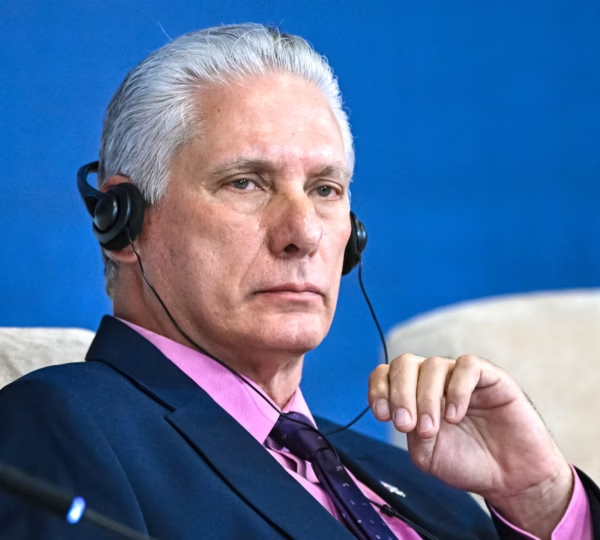
In response to Trump’s remarks about exerting control or influence, Cuban President Miguel Díaz‑Canel issued a firm public warning that his government would resist any attempt to undermine Cuba’s sovereignty.
Díaz‑Canel said on social media platform X that the Cuban people have “unbreakable resistance” and that any external aggressor would face determined opposition, framing external pressure as an attack on national independence.
He and other Cuban officials have also accused the United States of trying to destabilize Cuba’s political leadership and control its resources, presenting the dispute as part of a broader pattern of coercive pressure.
The Cuban government has repeatedly emphasized that any talks with the U.S. must respect the island’s sovereignty and independence, and that negotiations without preconditions are the only acceptable framework.
Despite strong rhetoric, there have been isolated attempts at dialogue, and officials from both sides have occasionally signaled a willingness — at least publicly — to explore diplomatic channels to reduce tensions.
Earlier in March 2026, Díaz‑Canel acknowledged talks had opened with the U.S. government, aimed at addressing bilateral differences through dialogue rather than conflict.
However, the context of these discussions remains strained by sanctions, economic hardship, and deep mistrust born of decades of antagonistic policy and historical grievances between Havana and Washington.
For decades, the U.S. embargo and other restrictive measures have constrained Cuba’s economic development, shaping public opinion and feeding perceptions of external hostility among many Cuban citizens.
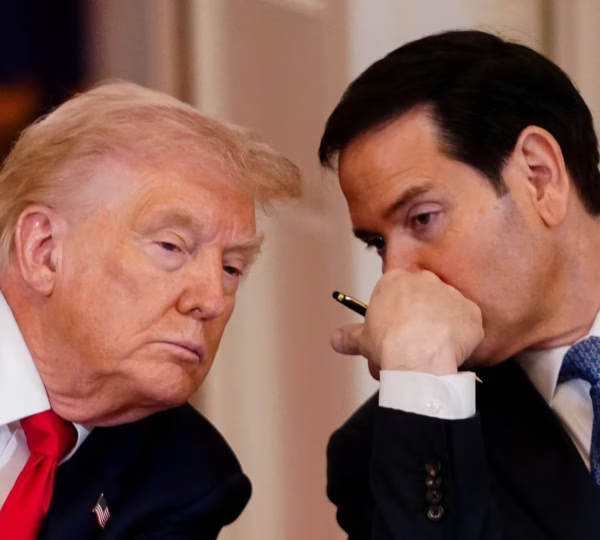
Trump’s renewed pressure campaign has included demands for political changes and a loosening of Cuba’s communist governance model, a stance repeatedly echoed by other U.S. officials including Secretary of State Marco Rubio.
Rubio and Trump have both called for new leadership in Cuba, framing the island’s economic collapse and blackouts as symptoms of failed governance and justification for political transformation.
The intensification of sanctions and the suspension of Venezuelan oil shipments — an indirect result of U.S. actions in neighboring Venezuela — have worsened Cuba’s energy shortages and tightened pressures on the government in Havana.
Cuba’s failure to secure reliable fuel supply has resulted in rolling blackouts, declining tourism revenues, and heightened public frustration, contributing to the island’s economic contraction.
Critics of U.S. policy have argued that sanctions and economic pressure disproportionately harm ordinary Cubans, exacerbating hardship without necessarily producing political change.
At the same time, some analysts contend that external pressure has a long history of failing to achieve sustained political transformation in Havana, noting that Cuban leaders have survived similar campaigns for decades.
The ebb and flow of U.S.–Cuba relations have always been shaped by global politics, ideological divisions, and strategic interests, from the Cold War to today’s multipolar geopolitical landscape.
In response to the fall of Venezuela’s leadership — another event with regional repercussions — Trump has suggested Cuba might follow a similar pattern of political change under U.S. influence.
Beyond rhetoric about “taking” Cuba, Trump has also framed potential U.S. engagement as either a “friendly” transition or a more forceful course of action if negotiations fail to produce meaningful reform.
International reactions have varied. Nations such as Russia have declared solidarity with Cuba, criticizing what they see as U.S. aggression and reaffirming their support for Havana’s sovereignty.
Russia’s foreign ministry expressed concern about what it described as the escalation of tension and called for respect for Cuba’s independence amid the unfolding dispute.
Other global actors, including China, have also condemned U.S. sanctions on Cuba, urging Washington to respect international law and lift punitive measures that disrupt peace and stability.
Cuba itself has emphasized its willingness to engage in dialogue without preconditions, even as it accuses the United States of exploiting economic hardship to destabilize its political system.
The situation is complicated by Cuba’s internal challenges, including declining GDP, food and medicine shortages, migration pressures, and social tensions, all of which are intensified by foreign policy disputes.
Observers note that while no major military confrontation has been announced, the combination of strong diplomatic rhetoric and economic pressure risks pushing bilateral relations into deeper conflict territory.
Public opinion on both sides remains divided: some in the United States advocate for pressure aiming at regime change, while others warn that sanctions and coercion worsen human suffering without fostering reform.
Cuban officials, for their part, continue to defend their political system and frame external pressure as interference in internal affairs rather than legitimate diplomatic engagement.
Amid this dynamic, analysts emphasize the importance of patience, measured diplomacy, and respect for international norms to avoid escalation and foster constructive engagement.
The unfolding U.S.–Cuba situation remains deeply fluid, shaped by policy choices, economic realities, historical legacies, and strategic calculations on both sides in a rapidly changing geopolitical context.
King Charles and Queen Camilla’s 4-day state visit to the U.S continued on Wednesday as they touched down in New York City. Previously, they spent two days in Washington, D.C., where they spent time with President Donald Trump and First Lady Melania Trump.
One scheduled outing in NYC was a visit to the 9/11 Memorial. They were welcomed by former NYC Mayor Michael Bloomberg, who is also the chairman of the 9/11 Museum and Memorial, and Beth Hillman, its president and CEO, who gave them a tour of the site.
Another person who was there to welcome the royal couple was the current NYC Mayor Zohran Mamdani. He was pictured shaking King Charles’ hand as they shared a few words, and was seen laughing during a short conversation.
However, this would be the only time that Mamdani would meet King Charles during the royal’s U.S. trip. Why? The mayor refused to meet the king in private.
Zohran Mamdani made it clear he wanted to distance himself from King Charles after he didn’t join him and Queen Camilla on the tour of the memorial site. On Wednesday morning, Joe Calvello, the mayor’s press secretary, said in a statement, “The mayor will not meet privately with King Charles. But the mayor will be at the wreath-laying ceremony today.”
NYC Mayor Zohran Mamdani’s ‘rude’ gesture to King Charles
While King Charles might not be used to being treated that way, Mamdani’s refusal has one main reason. Mamdani was questioned on whether they would have a private audience, to which he responded, “If I was to speak to the king separately from that, I would probably encourage him to return the Koh-i-Noor diamond.”
The stunning 106-carat diamond, known as the Koh-i-Noor, is set in the crown once worn by the Queen Mother. It was handed over to Queen Victoria in 1849 and has sparked controversy, and questions about who truly owns it have never gone away.
Critics claim the incredible piece of jewelry — said to be as large as a hen’s egg — was unfairly taken from Duleep Singh, a 10-year-old maharajah whose kingdom was seized by the British. The Guardian asked Buckingham Palace for a comment, but the palace declined to say whether it would return the diamond.
The fact that Zorhan Mamdani acted the way he did did not impress the Editorial Board at the NY Post. The newspaper, which has been hugely critical of Mamdani through his campaign and the beginning of his mayoral term, wrote, “Mamdani’s inexperience is no excuse for letting his personal passions blind him to the duties of his high office; it’s his addiction to performative displays that makes him such a clown.”
They added, “At best, his youth means there’s a chance he’ll learn from his graceless mistakes, and do a bit better the next time he’s called to represent all the people of New York City.”
Please share your opinion on this in the comment box on Facebook.
At first, he brushed it off. A small smile, a quick comment, trying to move past it like nothing was wrong. But those who knew him well could tell something wasn’t the same. His timing felt off, his focus drifting in and out, like his mind was trying to catch up with itself. It wasn’t something you could easily explain—but it was something you couldn’t ignore either.
Within hours, whispers started spreading behind closed doors. Staff members spoke quietly, trying not to jump to conclusions, but concern was growing fast. It wasn’t about politics or appearances anymore—it was about what was actually happening. The uncertainty was what made it worse. No one had clear answers, and that silence began to feel heavier than anything that had been said out loud.
Then came the moment that made everything real. A brief step away, a private conversation, and suddenly the tone shifted completely. Those closest to him began taking things more seriously, making sure he wasn’t alone, watching carefully for any further signs. It was no longer something that could be brushed aside or explained away with a quick excuse.
By the end of the day, one thing was clear—something had changed, and everyone in that room felt it. What started as a small, almost unnoticeable moment had turned into something far more serious, leaving people with more questions than answers and a growing sense that this was only the beginning of something bigger.
A resurfaced comedy clip featuring Robin Williams has recently captured widespread attention online, prompting audiences to revisit his sharp wit and remarkable ability to comment on public figures with humor and insight.
The clip, originally recorded during a stand-up performance in 2012, has sparked renewed discussion because of its pointed jokes about Donald Trump, years before Trump entered political office.
Robin Williams, who passed away in 2014 at the age of 63, remains one of the most beloved entertainers in modern history.
Known for his rapid-fire improvisation, emotional depth, and boundless energy, he built a career that spanned stand-up comedy, film, and voice acting. His work earned critical acclaim and numerous awards, including an Academy Award, multiple Golden Globe Awards, and several Grammy Awards.
While many younger audiences recognize him for his roles in family-friendly films and heartfelt dramas, Williams never strayed far from his roots in stand-up comedy.
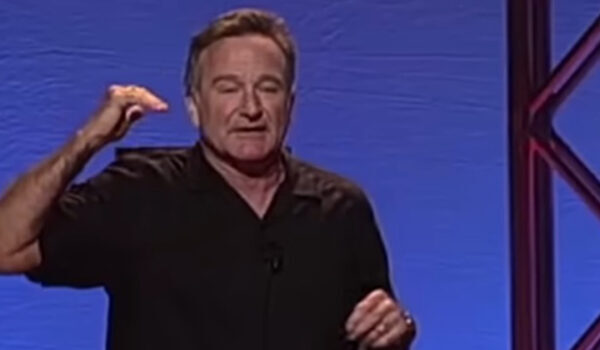
It was on stage where he expressed his most unfiltered observations about society, culture, and public personalities. His comedic style often blended absurd humor with sharp social commentary.
The resurfaced clip originates from a 2012 stand-up routine, a time when Donald Trump was primarily known as a real estate developer and television personality.
Trump’s presence in popular culture was largely tied to his business ventures and his role on reality television, rather than politics.
In the performance, Williams humorously describes a visit to Atlantic City, painting a chaotic and exaggerated picture of the environment.
He compares the experience to a surreal version of a well-known fantasy setting, using vivid imagery to entertain the audience while setting up his comedic observations.
It is within this context that Williams introduces Trump into the routine. He jokes that Trump resembles a powerful yet theatrical figure, likening him to a larger-than-life character who controls vast properties and wealth. The humor stems from exaggerating Trump’s public persona at the time.
Williams also pokes fun at Trump’s business style, joking about his tendency to brand properties with his own name. He humorously suggests that Trump plays a real-life version of a board game involving properties, highlighting the scale and visibility of his real estate ventures.
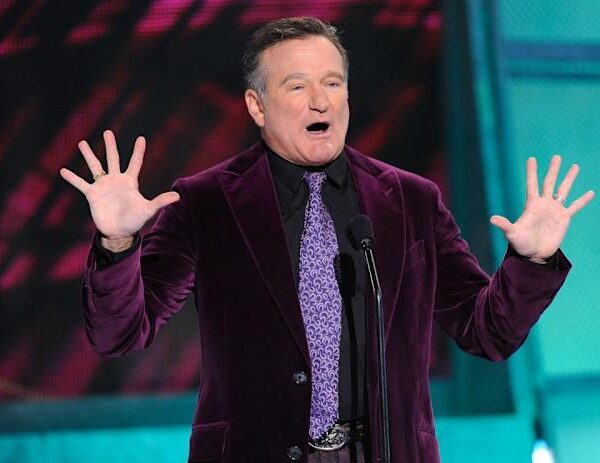
At the time of the joke, Trump had been associated with several high-profile casino properties in Atlantic City. Some of these businesses later faced financial difficulties, including bankruptcies and restructuring, which were widely reported in financial and business news.
Williams’s routine continues with commentary on Trump’s involvement in beauty pageants. Trump had owned major pageant organizations, including Miss Universe, Miss USA, and Miss Teen USA, which were part of his broader business portfolio for many years.
In one of the more provocative parts of the routine, Williams draws a comparison meant to highlight perceived contradictions. The joke references a well-known sports figure who had faced legal consequences for animal cruelty, using the comparison to emphasize the comedic point.
It is important to note that Williams’s humor often relied on pushing boundaries and making bold, sometimes controversial comparisons. This approach was a hallmark of his stand-up style, where he sought to provoke thought as well as laughter.
The routine also touches on public comments Trump had made in media interviews, which had attracted attention and criticism at the time. Williams incorporates these elements into his performance, framing them in a comedic light for his audience.
Another memorable part of the clip involves Williams joking about Trump’s distinctive hairstyle. This aspect of Trump’s appearance had long been a subject of public curiosity and humor, making it a natural target for comedic exaggeration.
Williams uses physical comedy to enhance the joke, mimicking the movement of hair and creating a visual gag that adds to the humor. His ability to combine verbal wit with physical performance was one of his defining strengths as a comedian.
The resurfaced clip has gone viral across social media platforms, where users have shared and commented on the performance. Many viewers describe the jokes as surprisingly relevant, even though they were made years before Trump’s presidency.
Some commenters have interpreted the routine as “prophetic,” suggesting that Williams had an unusually perceptive understanding of public figures. However, others note that comedians often draw from observable traits, making such insights part of their craft.
It is worth emphasizing that Williams’s jokes were based on Trump’s public image at the time. As a comedian, Williams was responding to widely known aspects of Trump’s persona rather than predicting future events.
The renewed interest in this clip also highlights the enduring appeal of Williams’s comedy. Even years after his passing, his work continues to resonate with audiences and spark conversation across different generations.
Williams’s legacy extends far beyond individual jokes or performances. He was known for his compassion, generosity, and ability to connect with people through humor. His performances often balanced comedy with moments of genuine emotional depth.
In addition to his stand-up work, Williams achieved critical acclaim in film. He delivered powerful performances in dramatic roles, showcasing a range that few comedians have successfully demonstrated.
His voice acting also left a lasting impact, particularly in animated films where his energetic and improvisational style brought characters to life in memorable ways. These performances introduced him to younger audiences worldwide.
The viral resurgence of the 2012 clip serves as a reminder of Williams’s ability to capture cultural moments through comedy. His observations often reflected broader societal themes, making his humor both entertaining and thought-provoking.
Social media has played a significant role in bringing older content back into public attention. Clips from past performances can gain new relevance when viewed through the lens of current events or perspectives.
In this case, the combination of Williams’s humor and the evolving public perception of Trump has contributed to the clip’s renewed popularity. Viewers are revisiting the performance with fresh eyes.
Some fans have expressed admiration for Williams’s courage in addressing prominent figures in his comedy. His willingness to tackle controversial subjects was part of what made his stand-up performances so compelling.
Others have simply appreciated the humor itself, noting that the jokes remain funny regardless of their perceived relevance. Williams’s comedic timing and delivery continue to stand out.
The discussion surrounding the clip also reflects broader conversations about the role of comedy in society. Comedians often serve as commentators, using humor to explore and critique public figures and institutions.
Williams was particularly skilled at this form of commentary, blending satire with empathy. He had a unique ability to make audiences laugh while also encouraging them to think critically about the world around them.
It is also important to approach viral content with context. While the clip is genuine and originates from a real performance, interpretations of its meaning can vary widely among viewers.
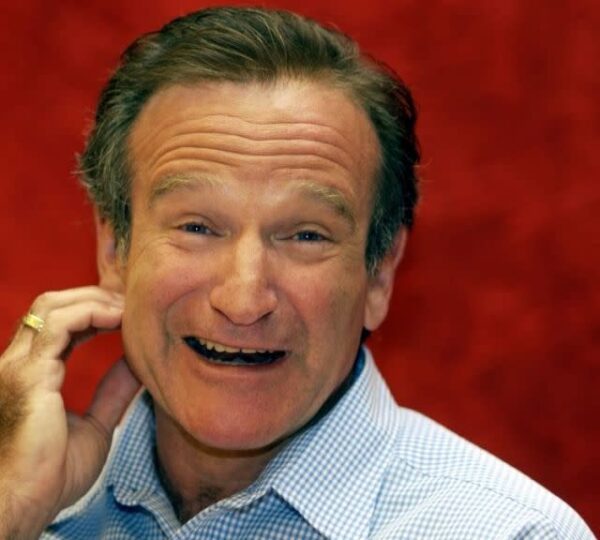
Some descriptions of the clip online may exaggerate its significance or frame it in ways that go beyond what was originally intended. Understanding the context helps maintain an accurate perspective.
The renewed attention on Williams’s work has also prompted reflections on his personal life and struggles. He was open about his challenges, including mental health issues, which he faced with honesty and courage.
His passing in 2014 was a profound loss for the entertainment world and for fans around the globe. Tributes at the time highlighted not only his talent but also his kindness and humanity.
In the years since his death, Williams’s work has continued to inspire and entertain. His performances are frequently revisited, and new audiences continue to discover his contributions to comedy and film.
The viral clip is just one example of how his legacy endures. It demonstrates the timeless quality of his humor and the lasting impact of his observations.
As viewers share and discuss the clip, they are also participating in a broader appreciation of Williams’s artistry. His ability to connect with audiences remains as strong as ever.
The conversation around the clip also underscores the importance of media literacy. Recognizing the difference between factual content and exaggerated claims helps ensure a more accurate understanding.
In this case, while the clip is authentic, interpretations that describe it as predictive should be viewed as subjective opinions rather than factual conclusions.
Williams’s comedy often reflected the cultural landscape of his time. His jokes about public figures were rooted in their public personas, making them relatable and accessible to audiences.
This approach is a common technique in stand-up comedy, where performers draw from real-world events and personalities to create humor that resonates with listeners.
The effectiveness of Williams’s routine lies in his delivery as much as in the content itself. His energy, voice modulation, and physical expressions brought his jokes to life.
These qualities are evident in the resurfaced clip, which showcases his dynamic stage presence and ability to engage an audience fully.
As the clip continues to circulate online, it serves as both entertainment and a reminder of Williams’s unique talent. His work remains a benchmark for excellence in comedy.
The enduring popularity of his performances highlights the universal appeal of humor that is both intelligent and accessible. Williams excelled at striking this balance.
For many fans, revisiting his work is a way of celebrating his legacy. It provides an opportunity to remember the joy and laughter he brought to millions of people.
The discussions generated by the clip also demonstrate the power of comedy to spark dialogue. Even years later, Williams’s jokes continue to inspire conversation and reflection.
Ultimately, the resurfaced clip is a testament to the lasting relevance of Williams’s work. It shows how great comedy can transcend time and remain meaningful across different contexts.
While interpretations of the clip may vary, its core value lies in the humor and insight it offers. Williams’s ability to entertain and engage remains undeniable.
As audiences continue to share and discuss the performance, they contribute to keeping his legacy alive. His influence on comedy and entertainment continues to be felt.
In reflecting on the clip, it is clear that Williams’s talent extended far beyond making people laugh. He had a rare gift for observing the world and expressing those observations in memorable ways.
This combination of humor and insight is what made him one of the most respected figures in entertainment. His work continues to inspire both audiences and fellow performers.
The viral resurgence of this clip is just one example of how his legacy endures in the digital age. His voice and perspective remain relevant and impactful.
As new generations discover his work, Williams’s influence will likely continue to grow. His contributions to comedy and film have left an indelible mark on popular culture.
In the end, the renewed attention on this performance is less about prediction and more about appreciation. It highlights the brilliance of a comedian who understood how to connect with people.
Robin Williams’s legacy is defined not only by his achievements but also by the joy he brought to others. That legacy continues to shine through moments like this.
And as audiences revisit his performances, they are reminded of the enduring power of laughter and the timeless appeal of a truly gifted entertainer.
Dangerous escalation in the Persian Gulf – Reports of attacks on US bases
Iranian television, citing the military, has announced the launch of an attack on US bases in the Gulf region. According to reports, Iran has hit military bases in the Persian Gulf, while local authorities in several countries have called on citizens to stay home and avoid any military areas. According to Reuters, a powerful explosion has been reported in Abu Dhabi, while the United Arab Emirates has closed its airspace. It is reported that the Al Dhafra air base in the United Arab Emirates has been targeted with Iranian ballistic missiles, causing large explosions. In Manama (Bahrain), smoke has been reported in the Al Jufair area, where a US Fifth Fleet base is located, after an alleged Iranian attack. Qatar’s Interior Ministry has called for shelter in place as a Patriot missile system reportedly intercepted a missile targeting the Al Udeid airbase. Authorities have announced the closure of the country’s airspace
Ariana Grande Confirms.
When Ariana Grande shared that she had tested positive for COVID-19, the brief update quickly spread across social media, prompting concern from fans worldwide. Behind the simple message was an intense 48-hour period marked by subtle warning signs and careful decisions. According to sources close to the singer, it began with lingering fatigue that didn’t ease with rest, followed by mild throat tension and unusual vocal strain during rehearsals. While such symptoms can be common for performers with demanding schedules, the persistence raised concern.
Ariana calmly requested testing, following safety protocols she has long treated as routine. Both a rapid and confirmatory test were administered, and she isolated while awaiting results. When the diagnosis was confirmed, priorities shifted immediately. All professional commitments were paused, and medical specialists were consulted to protect her health, especially her voice.
Rather than keeping the news private, Ariana chose transparency, sharing the facts without drama or speculation. Fans responded with overwhelming support, emphasizing rest and recovery over schedules. For now, her focus is simple: healing fully before returning to the spotlight.
ADVERTISEMENT
