ADVERTISEMENT
The conversations always followed the same structure. He would start casually, asking about my grandfather’s health, the weather, small details that sounded like concern. Then, slowly, he would shift.
“Has he updated anything recently?”
“Who’s handling the paperwork?”
It looked official, printed on thick paper, the kind meant to feel legitimate at a glance. But something about it didn’t sit right. I read it once.
Then again. The language was vague in all the important places. It suggested temporary authority over certain decisions, framed as convenience, but left enough room to become something permanent if no one was paying attention.
Not warmly. Not kindly. Just knowingly.
Everything was organized. Precise. Intentional.
Not outwardly. Nothing dramatic changed. But behind the scenes, everything became deliberate.
He contacted a different attorney—someone my father didn’t know, someone who wasn’t part of the usual family network. I went with him to the meetings. Not because he needed help.
About how easily things can be misunderstood—or misrepresented—if they aren’t written clearly enough. I learned about trusts. About how property could be protected not just by who it was given to, but by how it was structured.
And then there was something else. Something he explained more carefully than anything else. “A clause,” he said.
He explained it slowly. Not in complicated legal terms, but in simple language. If someone tried to challenge the will…
They wouldn’t just fail.
They would lose everything they had been given. It wasn’t revenge. It wasn’t anger.
It was protection. “Paper doesn’t forget,” he said, tapping the document lightly. “And it doesn’t get emotional.”
I asked him once if he was worried about how my father would react.
He shook his head. “I’m not planning for his reaction,” he said. “I’m planning for the truth.”
As his health began to decline, my father’s calls became more frequent.
So did the visits. He showed up twice that year, both times acting like the lodge already belonged to him. He walked through the rooms slowly, touching things as if he were reminding himself they were real.
He spoke louder than necessary. More confident than usual. One time, while my grandfather stepped outside, my father leaned toward me.
“You know this won’t last,” he said quietly. I looked at him. “What won’t?”
“This,” he said, gesturing vaguely.
“All of it. He’s just being sentimental.”
I didn’t answer. Because I had already seen the documents.
And I knew there was nothing sentimental about them. Later that evening, my grandfather and I sat on the porch as the sun disappeared behind the mountains. The light faded slowly, turning everything softer.
“I’m not leaving this up to chance,” he said. I nodded. I already knew.
He reached into his jacket and pulled out a folded piece of paper. It looked ordinary. But I knew it wasn’t.
“This is the last part,” he said. “The one they won’t expect.”
I read it carefully. Then again.
Then a third time. Because that’s how he had taught me. “Are you sure?” I asked quietly.
He looked out toward the mountains. Then back at me. “The people who deserve something,” he said, “won’t need to fight for it.”
That sentence stayed with me.
Long after that night. Long after everything else. When he passed, the mountains were quiet.
The kind of quiet that feels heavier than usual. I stayed at the lodge for as long as I could, moving through the rooms slowly, noticing things I had never paid attention to before. The way the floor creaked near the window.
The way the light hit the kitchen table in the mornings. The way everything felt… steady. Even without him.
My father called the next day. “We’ll handle everything,” he said. Not a question.
A statement. I thanked him. And then I waited.
Because I knew something he didn’t. And some truths don’t reveal themselves until the very last moment. The Moment Before It Breaks
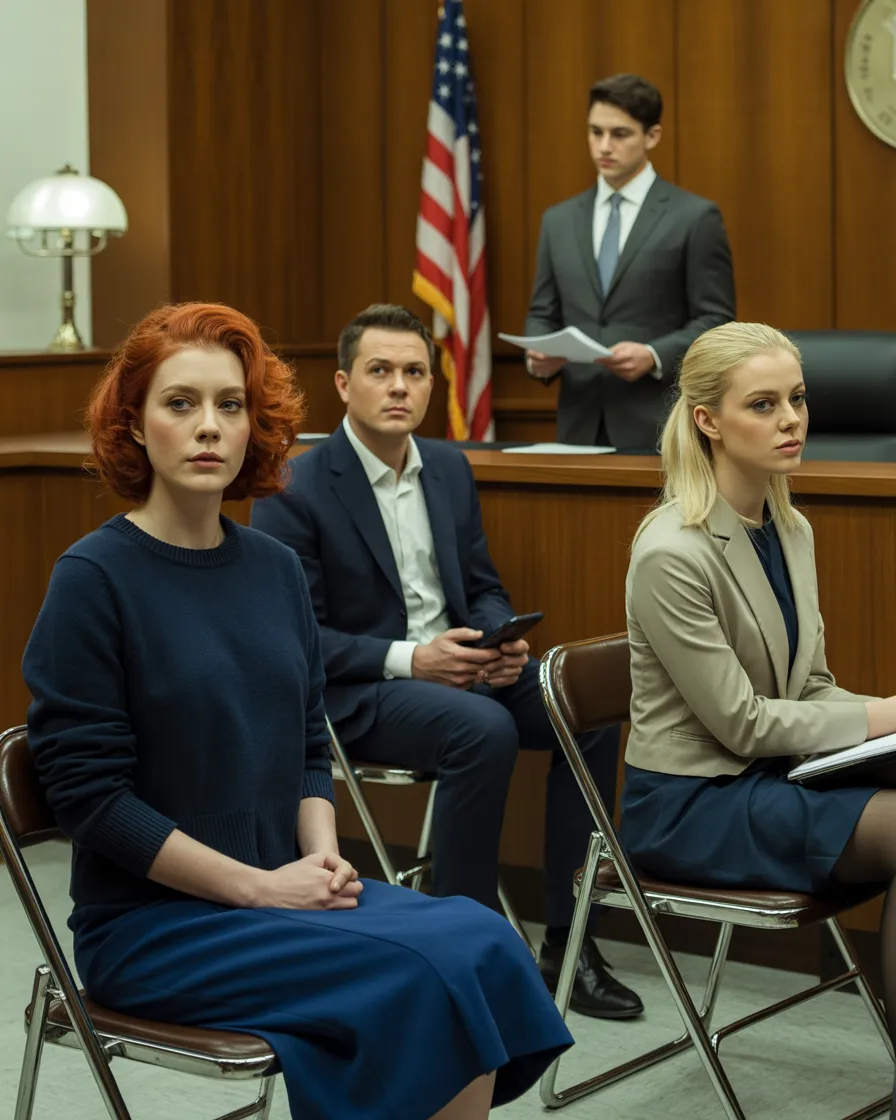
The courtroom felt smaller the longer the reading went on.
Not physically. But in the way tension closes space between people without anyone moving. The judge continued through the will in a steady voice, page after page of decisions that sounded important but didn’t carry the weight everyone was waiting for.
Small bequests. Personal items. Amounts that made people nod politely but didn’t hold their attention for long.
No one had come for those. They were waiting for the house. My father shifted in his seat, checking his watch once, then again.
He wasn’t worried. He was impatient. To him, this was just a formality.
A necessary delay before something already decided could be confirmed out loud. Every so often, he leaned toward someone beside him, whispering with a faint smile, like he was sharing something amusing. Confidence looks a certain way when it’s built on assumption.
Relaxed. Certain. Almost careless.
I sat quietly in the second row, watching everything. Not just the judge. Not just the documents.
But the people. The way they leaned forward when certain phrases were read. The way their expressions shifted when numbers were mentioned.
The subtle exchange of looks that passed between them, like silent agreements already forming. They weren’t listening. Not really.
They were waiting. At one point, the judge paused to turn a page. The sound of paper sliding against paper echoed louder than it should have.
My father leaned back again, stretching his arm across the chair beside him, completely at ease. “She hasn’t even been around,” he said, louder this time, not bothering to lower his voice. Someone behind him chuckled.
Another voice added, “He wouldn’t leave something like that to someone who disappeared.”
The word disappeared lingered in the air. As if absence had erased everything that came before it. I didn’t react.
But I remembered. I remembered the nights I drove up the mountain in the dark, headlights cutting through fog, just to make sure the pipes hadn’t frozen. I remembered sitting at the kitchen table with stacks of documents, reading every line out loud while my grandfather listened carefully, asking questions that no one else had thought to ask.
I remembered fixing things no one else even noticed were broken. Showing up. Again and again.
Without being asked. Presence doesn’t announce itself. It builds quietly.
And most people don’t see it until it’s written down. The judge cleared his throat. “Continuing,” he said, his tone unchanged.
Another section. More names. More small decisions.
People shifted in their seats, some losing interest now, others growing more focused as they sensed the moment approaching. My stepmother leaned slightly toward my father. “Almost there,” she whispered.
I saw the way his lips curved, just slightly. He believed it. He believed the outcome had been his long before the reading began.
I folded my hands tighter in my lap. Not out of nerves. Out of patience.
Because I knew something they didn’t. And the closer the judge got to the end, the clearer it became that no one else in that room had read a single line of what actually mattered. The judge paused again.
This time longer. He adjusted his glasses, looking down at the final pages in front of him. There was a shift in the room.
Subtle. But noticeable. People straightened.
The quiet grew heavier. Even the small movements stopped. “This concludes the general provisions,” the judge said.
A few heads lifted. My father uncrossed his legs, leaning forward slightly now, attention sharpening. “And we will now proceed,” the judge continued, “to the final clause.”
That was the moment everything narrowed.
Not in sound. Not in movement. But in focus.
Every assumption in that room gathered itself in silence. Every expectation. Every quiet claim that had been building for years.
My father exhaled slowly, like someone preparing to hear what he had already accepted as fact. I looked at him. Really looked.
At the confidence. At the certainty. At the ease of someone who had never needed to question his place in anything.
And for a brief second—
I wondered what it would feel like to believe something that completely. The judge began to read. No change in tone.
No dramatic pause. Just the same steady voice that had carried through everything else. But this time—
People were listening.
Because this was the part they had been waiting for. The part they thought they already knew. I felt my heartbeat slow, not speed up.
That same calm I used to feel standing on the lodge porch early in the morning, before the sun came up, before anything had the chance to move too quickly. Because I knew what was written on that page. And I knew—
The moment the judge finished reading it—
Everything in that room was going to change.
What Was Written Last
The judge didn’t raise his voice. He didn’t pause for effect. He simply read.
“The remainder of the estate,” he said, eyes fixed on the document, “including full ownership of the mountain property…”
That was the moment the room leaned in. Not physically. But collectively.
Every person present holding the same quiet expectation. My father’s posture shifted just slightly. Not enough for most people to notice.
But I saw it. The readiness. The confirmation he had been waiting for.
“…shall be transferred,” the judge continued, “into the irrevocable trust established on March 14…”
A few brows furrowed. The word trust wasn’t what they expected. But no one spoke.
Not yet. “…naming my granddaughter as sole beneficiary and successor trustee.”
Silence. It didn’t explode.
It didn’t shatter. It settled. Heavy.
Complete. My father blinked. Once.
Then again. As if the words needed time to rearrange themselves into something that made sense. “That’s not right,” he said finally, a short laugh slipping into his voice.
“There must be a mistake.”
The judge didn’t look up. He turned the page. “The property shall not be sold, transferred, or leveraged by any individual other than the named beneficiary,” he continued, voice steady.
“Any attempt to contest this provision…”
Now people were listening differently. Not waiting. Listening.
“…or misrepresent my intentions,” the judge went on, “will result in immediate forfeiture of all remaining interests.”
A soft sound broke somewhere in the back of the room. Not a voice. Something dropping.
My stepmother leaned forward, her expression tightening. “What does that mean?” she whispered. It meant exactly what it sounded like.
My father stood up. Slowly. Like the movement itself might change something.
“I’m his son,” he said, his voice sharper now. “This doesn’t make sense.”
The judge finally looked at him. Calm.
Unmoved. “This document,” he said, tapping the page lightly, “is legally executed and witnessed.”
“But she hasn’t been part of this family,” my father insisted, turning slightly, gesturing toward me like I wasn’t sitting there. “She left.”
I met his gaze.
“You told me to.”
That landed. Not loudly. But clearly.
The judge raised a hand. “Please allow the reading to continue.”
My father didn’t sit right away. For a moment, it looked like he might argue further.
Push harder. Force something to shift back into place. But nothing moved.
So he sat. The judge reached for a sealed envelope. “This statement,” he said, “was included by the testator to clarify intent.”
He looked at me.
“You may read it.”
I stood. My legs felt steady. More steady than I expected.
The envelope was heavier than it should have been. Not physically. Just in what it carried.
I opened it. Unfolded the paper. Recognized the handwriting instantly.
And began. “I did not make this decision out of emotion,” I read. “I made it out of observation.”
The room stayed silent.
No whispers now. No laughter. “The person who showed up without being asked,” I continued, “who took responsibility without expecting anything in return, is the person I trust with what I built.”
I paused for a second.
Not because I had to. But because I wanted them to hear it. “This property is not a reward,” I read on.
“It is a responsibility.”
No one moved. “The one who understands that distinction,” I finished, “is the one who will keep it.”
I lowered the paper. The judge closed the file.
“That concludes the reading.”
And just like that—
Everything ended. Not with noise. Not with argument.
But with something much heavier. Reality. My father didn’t speak immediately.
He looked around the room. At the people who had laughed earlier. At the ones who had nodded in agreement when he said I would get nothing.
No one was laughing now. My stepmother reached for his arm. He pulled away.
“This is manipulation,” he said finally, though the certainty was gone now. “She turned him against me.”
No one responded. Because there was nothing left to argue.
The documents had already done their work. I folded the letter carefully and placed it back into the envelope. Then I turned and walked toward the door.
No one stopped me. Outside, the air felt different. Not lighter.
Not heavier. Just… clear. I stood there for a moment, breathing it in.
For years, I had been something that didn’t quite exist to them. A name they avoided. A story they simplified.
A version of events they didn’t have to question. And in a single moment—
That version collapsed. Not because I fought for it.
Not because I argued. But because someone had taken the time to write the truth down. I walked to my car slowly.
No rush. No urgency. Because for the first time in a long time—
I wasn’t leaving something behind.
I was stepping into something that had already been prepared for me. Not as a reward. But as a responsibility.
And that made all the difference.
ADVERTISEMENT
