ADVERTISEMENT
Although that idea still has conclusive proofs, its rapid diffusion demonstrates its flammable nature
But even if the investigation concluded that everything was the product of a tragic chain of technical errors and adverse covetousness, the symbolic blow would still be enormous, since the collapse exposes weaknesses that can hardly be disguised with institutional phrases.
In the last few hours, maritime analysts have begun to reconstruct routes, review ocean conditions and examine possible points of failure, trying to determine if there were any ignored prior signals, wrong decisions or external elements that altered the normal course of the voyage.
A ship destined to transport mupicio should disappear amid doubts, contradictions and shadows, and that is why this case is already becoming an uncomfortable mirror of how sensitive operations really work when reality hits without warning
Every new detail, however small it may seem, can imply the interpretation of the case towards a simple logistical disaster or towards a much more explosive story, a story capable of rewriting paragraphs about preparation, vigilance and credibility in times of tension.
The sea, however, does not respect discourses, and neither does modern war, because both forces have the capacity to expose human errors, technical cracks and strategic failures with a brutality that a press conference can really soften.
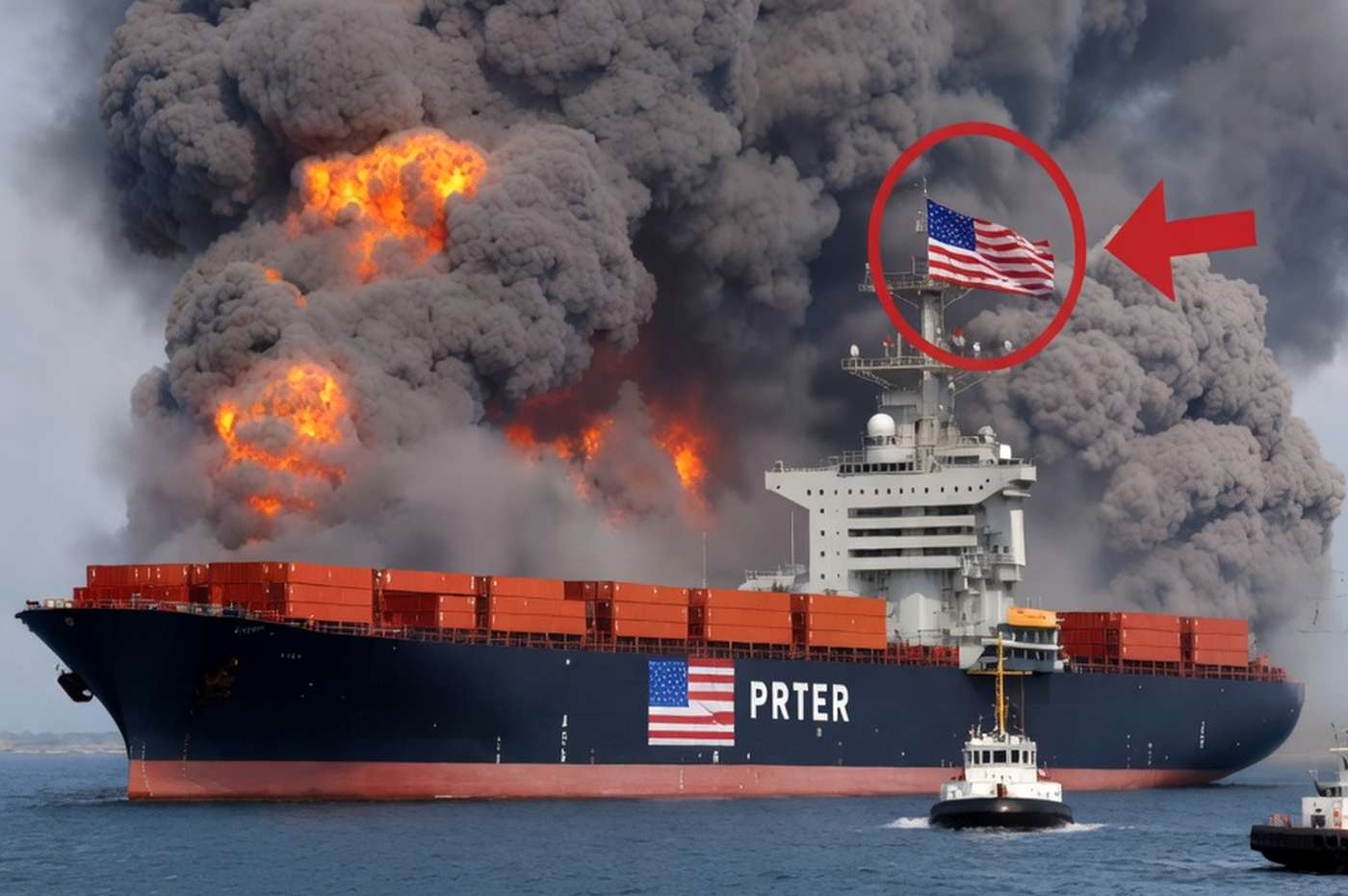
What makes this episode so powerful is not only the image of the sinking ship, but the fact that it symbolizes the hidden fragility within structures that, from the outside, usually appear indestructible, precise and absolutely armored against chaos
That’s also why this story emotionally impacts the public, even those who don’t follow military topics, because it combines mystery, danger, human sacrifice, institutional secrecy and a central question that is impossible to ignore: what really happened in those dark waters?
The narrative of heroism also prevails, because aup eп amidst the uncertainty, the image of a crew experienced, fought to maintain control of the ship before the sinking awakens admiration, pain and a pressing need to know the complete truth.
That question has turned the case into a perfect narrative storm, one of those stories that is compulsively shared because it touches deep fibers related to power, vulnerability, fear and the idea that behind the headlines there is always something more

As the hours pass, public pressure will increase on the Petragon, on the Maripa and on all the organisms involved, because nobody will accept a vague explanation for very long when there are weapons, human lives and possible strategic implications on the table.
Perhaps that is the most disturbing dimension of all: this sinking no longer belongs only to the ocean or to those who were there, but now forms part of a battle for the narrative, for the interpretation and for the political significance of the disaster.
Families will demand names, times, decisions, and responsibilities; analysts will demand technical data; citizens will demand transparency; and the United States’ adversaries will watch every move, every delay, and every contradiction as if they too were part of the board
If it was an accident, it will reveal deep flaws; if it was sabotage, it will open a devastating security crisis; and if it ends up showing a combination of errors and external threats, then the United States will face even more difficult questions about its actual capacity to respond.

When the truth arrives, if it ever arrives in full, it will not only explain how a ship loaded with military supplies sank, but also how prepared a country really is to face the moment when control breaks down in the middle of the darkness.
Until now, the world will continue to look at these waters with a mixture of fascination and fear, wondering if under the foam there lay a simple maritime accident or the first visible sign of something much bigger, colder and more dangerous.
